
Varvakios
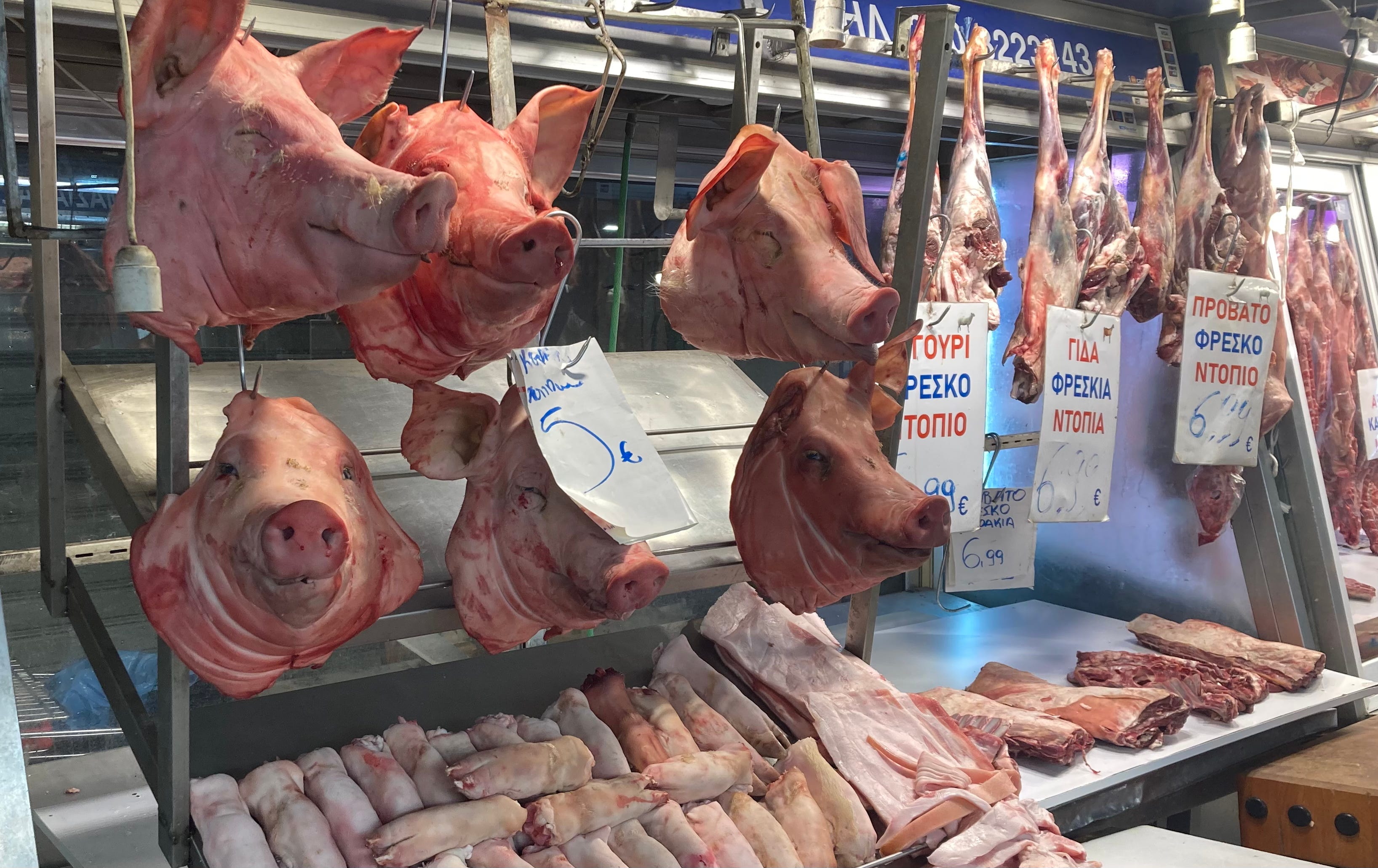
At the meat and fish market in central Athens, wondering why every other country in Europe seems to have a richer, steadier relationship with food than we do in the UK.

It was raining hard in Athens, and the streets were afloat with trash and fag-ends. I walked up through fleamarkets selling antique religious icons and postcards and tubs of drachma coins. These were replaced by Euros in 2002 and now they’re just scrap metal - I bought a fistful for my son because a few of them are like washers with holes in middle, and others are embossed with owls and the faces of ancient gods. I reckoned we could have fun looking at them together, but the way the stallholders were letting the rain splash onto these coins from the overhead awnings suggested that it wasn’t worth the work of keeping them dry. Towards the bottom of each bin of discarded Greek money, the coins were forming into green clumps like spoiled barley at the hopper-bottom.
Crossing the street through a terrible hiss of busbrakes and wheelwater, I slipped inside the Varvakios fish and meat market - and it seems to be a universal truth of European travel that wherever you go across the continent, everybody seems to have a better food culture than we do at home, not only in terms of fresh and abundant produce, but also in a latent understanding of how food should be processed and carried across the finish line to the fork.
