
A Wader Spring
It makes sense to prioritise certain landscapes for curlew and lapwing conservation in Scotland - but there is a heartbreaking downside to this approach...

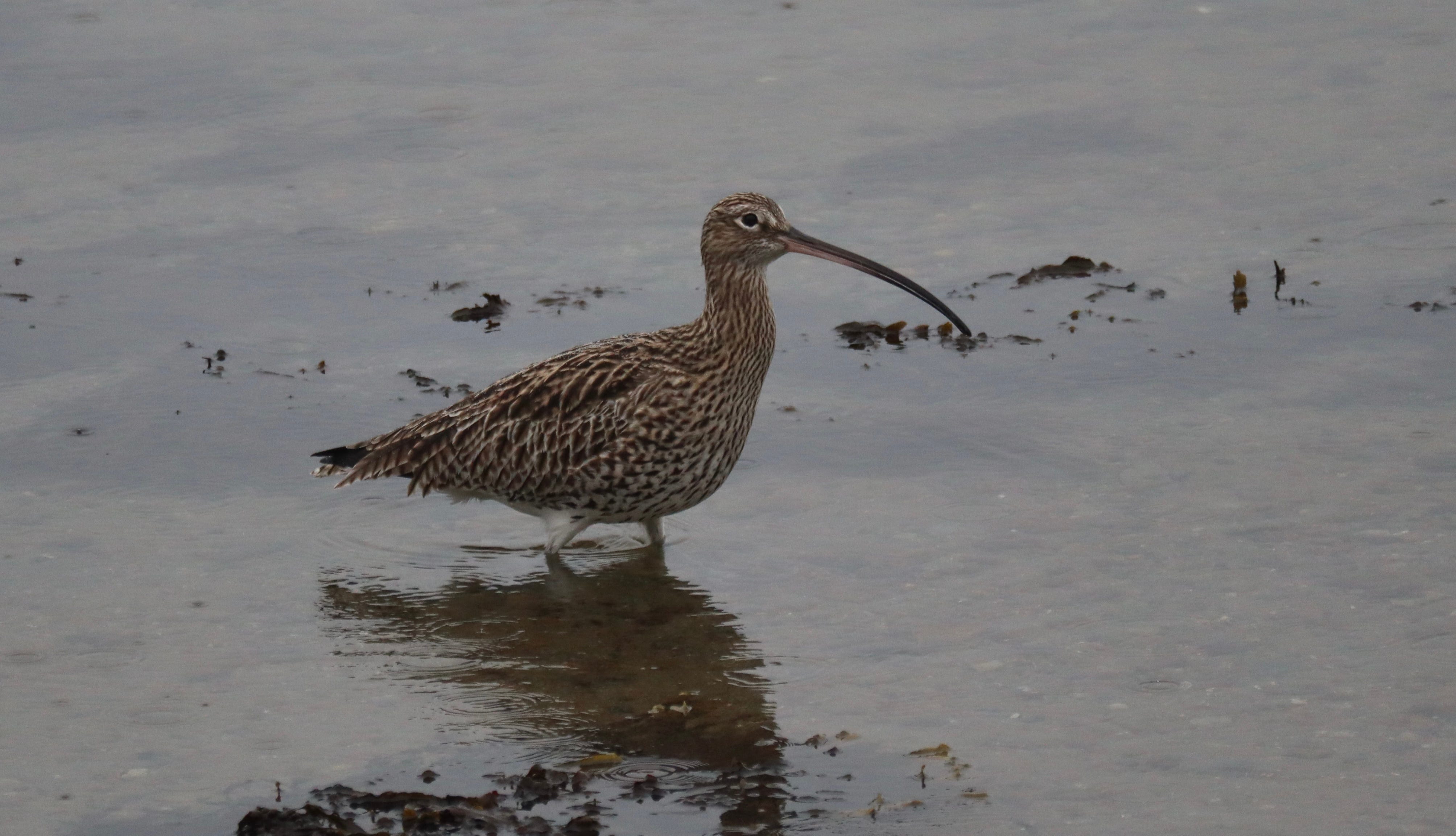
I’ve seen more wading birds this spring than I’ve seen in ten years combined. I’ve been staggered by overwhelming flocks of curlews and oystercatchers on Islay, and I’ve been thrilled by the twists and spiralling turns of lapwings above the ancient standing stones of Caithness. I’ve even been felled by the swell of black grouse and snipe displaying a few miles over the border into England - and there’s no doubt that, for a wader enthusiast like me, this is the best time of the year to be alive.
But there’s a fly in the ointment, because all of these encounters have been driven by a big project I’m working on for the Scottish Government. After twenty years of paying farmers to conserve wading birds, it’s become clear that much of this work has failed to deliver the goods. No matter where you look, conservationists are being nudged away from “traditional” Government funding streams towards more lucrative (but potentially far more risky) private finance opportunities in the form of corporate “biodiversity offsetting”. That’s no surprise. Governments don’t want to commit themselves to funding conservation work every year in perpetuity, particularly when everybody is tightening their belts - and it’s hard to justify a running cost for conservation when that conservation doesn’t even seem to work. Millions of pounds have been spent on waders, but they just keep declining anyway.
I would like to say that the Scottish Government has proposed the development of “Wader Recovery Areas” as a method of focussing funding and improving results. They haven’t, but they’ve vaguely permitted other people to develop this idea - without any commitment to fund or deliver it and with the massive caveat that it can proceed for so far as it doesn’t interfere with any other policy objectives (particularly their obsession woodland expansion, which is a principal driver of wader decline in many areas). You can be sure that if the idea goes well, a Government Minister will turn up to have their photograph taken at the “launch ceremony” - and you can also be sure that if it doesn’t go well, it will never be mentioned again. Because that’s what conservation is.
As part of the reconnaissance work for this project, I have been asked to travel around Scotland to review the viability and options of eighteen “Wader Recovery Areas” from Lanarkshire to Shetland, trying to flesh out a feasibility study which has so far been conducted using survey data and satellite mapping. It follows that I have been having an excellent Spring, travelling from one wader hotspot to another in such a way that it’s easy to forget that these birds are actually doing very badly. All I see are good news stories, and rolling out of my bunk on South Ronaldsay at 4:15am a fortnight ago, I was overwhelmed with the sound of curlews displaying overhead - all the half-forgotten memories of what Galloway used to be hung suspended against the starlight and the coming dawn.
And here’s the rub, because while the new strategy proposes to focus attention upon areas where waders are still doing well, it tacitly overlooks the fact that it will effectively choke out resources from places where waders are doing badly. To be sure, a cost/benefit analysis of wader conservation in Galloway is fairly cut-and-dry exercise. The birds are so smashed up and fragmented here that they’re almost certainly doomed. It’s coming up for the middle of April and I haven’t yet seen a single breeding pair of curlews at home. It doesn’t make sense to keep pouring good money after bad, and it’s a far better idea to channel resources into places where wading birds still stand a chance.
I’m making it sound like birds which breed in “Wader Recovery Areas” are about to be saved by this new initiative. I have to reiterate the fact that there’s no commitment to make this work from anybody in Government - and there are no clear signs that even if you’re in a designated area for waders, you’ll be able to use that designation to steer or influence new woodland planting schemes or renewable energy developments which risk harming the birds. Plus, it turns out that wader conservation is not always that easy to integrate with other land uses - sometimes it needs to be the priority which wins out above everything else. As it stands, there’s no political will to do this - so even the greatest Wader Recovery Area could still be overruled and destroyed by other policy decisions. In the end, all this work might not make any difference anyway.
Since “Wader Recovery Areas” aren’t a golden ticket to success, it has to be said that they’re the only show in town - and they’re better than nothing at all. But here’s where I sicken further, because there aren’t even any proposed “Wader Recovery Areas” in Galloway, and there never will be… so maybe it’s disloyal of me to realise that it was never really about the curlews for me anyway. When I travel north to explore fantastic birds in beautiful places, I’m delighted by the experience - but it doesn’t fill a different and more cavernous wound in my own sense of place. And I have to remind myself yet again how badly things have gone wrong. It’s not about my birds or your birds or how landscapes are harmed by the loss of wildlife - it’s now a flat-out sprint to prevent these birds from disappearing everywhere. Galloway’s loss will seem pretty tiny against the final global extinction of entire species.