
A Stone's Throw
Looking towards Donegal from the rain-soaked, hare-boxed, goose-dinning island of Islay

Soft and misting rain fell on throughout the dawn, and the wood was loud with the song of thrushes. Heading inland from the sea, I followed a line through the twilight and found myself on the cheek of a stone bridge where an old-run fish had been killed in the river below. Its head eaten off, the silver body lay beneath a bend of daffodils and sodden grass like a pool of the sky in a trough - and then I had reached the limits of the wood and looked out across those barley stubbles which make Islay famous as the home of malt whisky and a boom-town for wintering geese.
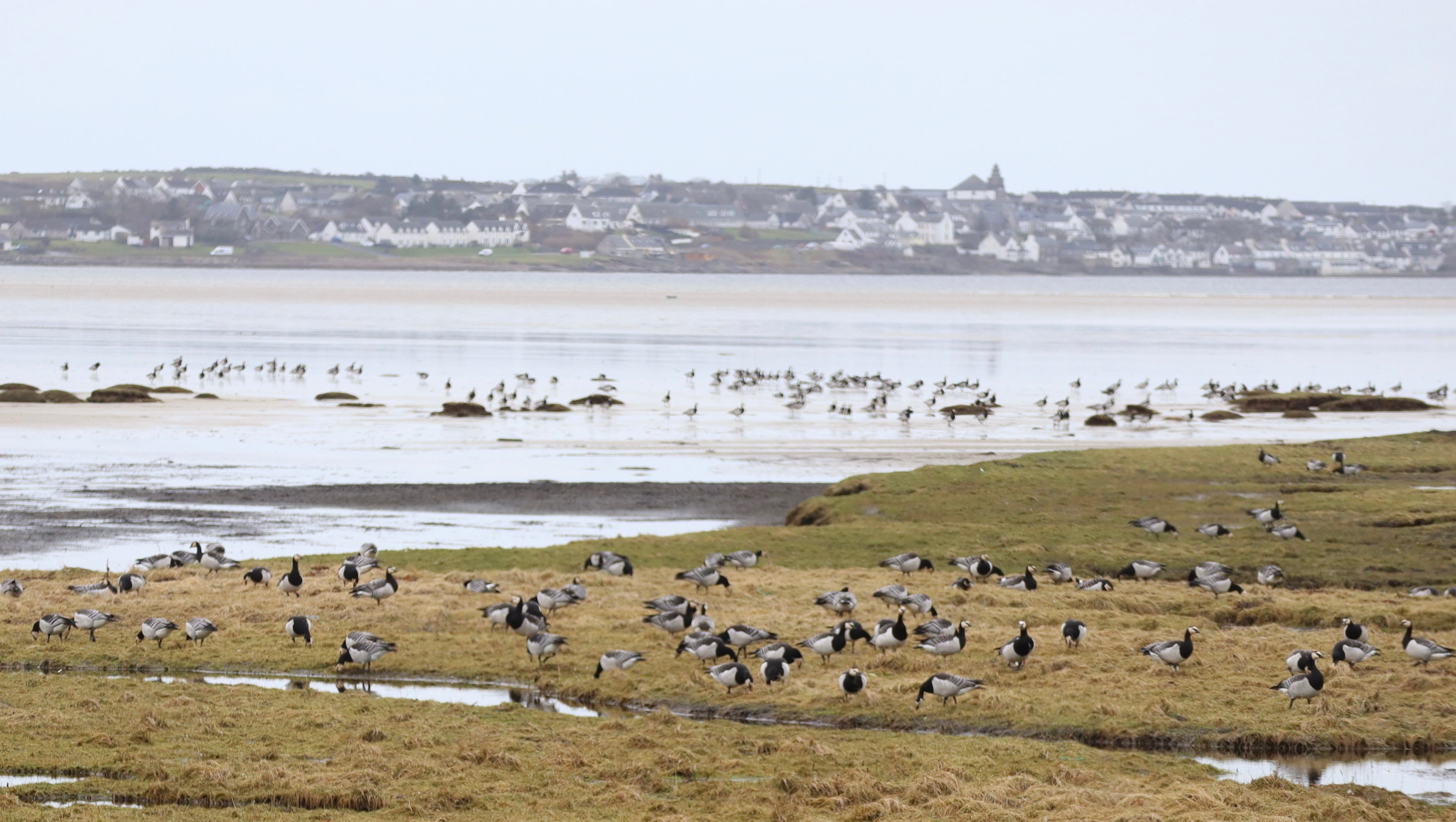
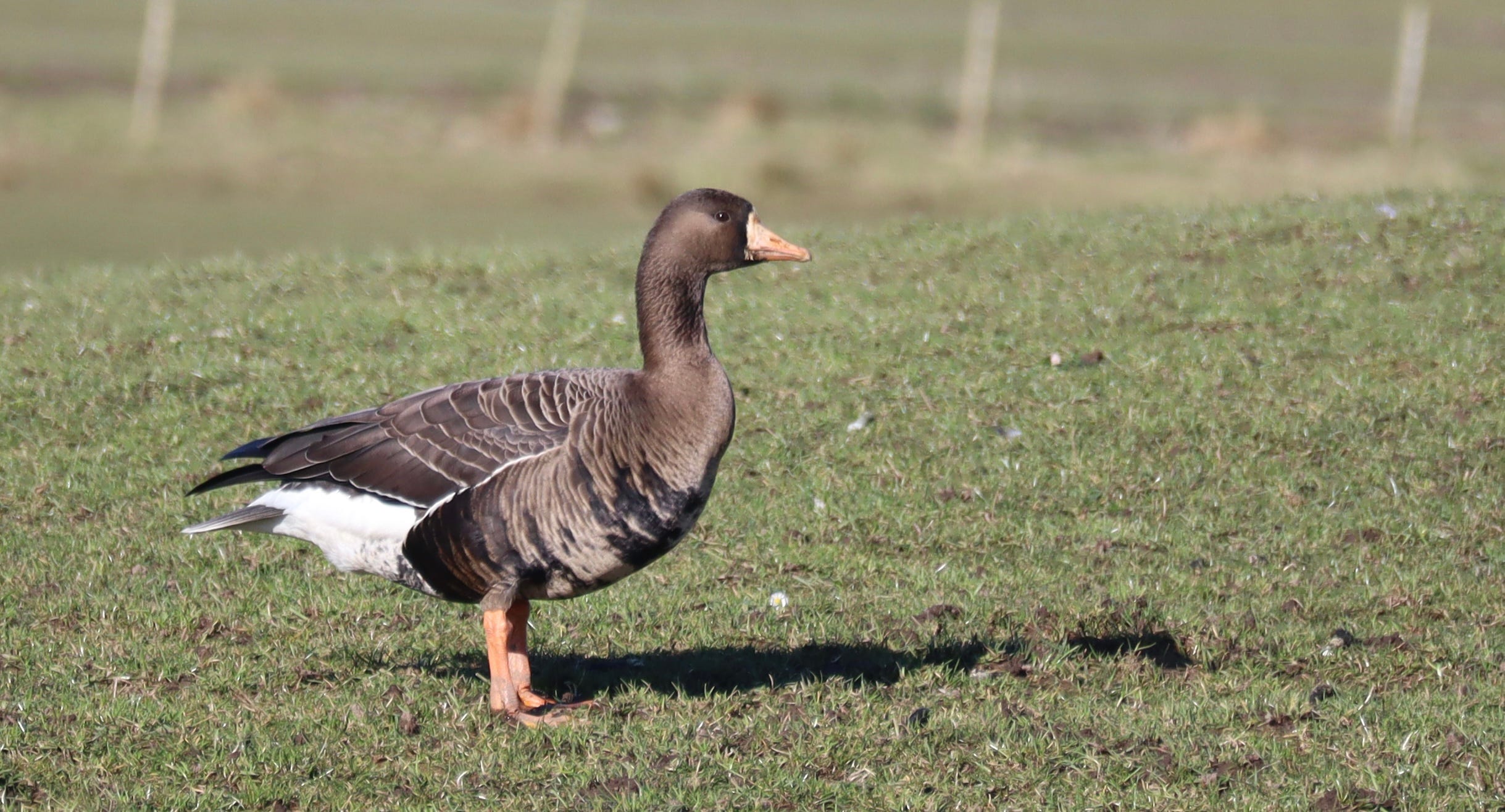
I had lain in bed all night listening to those geese calling through the open window - the chatty bark of barnacles and sometimes a stranger and more plaintive squeak on the breeze; the sound of whitefronted geese which cut a strange dash on this island of wildfowl. Geese make the clouds rattle when fields are cleared or shots are fired to keep them moving, but unlike the surging thousands of barnacles and greylags and canada geese, these whitefronts are dwindling away to nonexistence. Something is broken in their complex breeding cycle, and even the most optimistic researchers reckon that they’re on a road to nowhere. Mixed into a turmoil of roaring feathers, it’s hard to tell which birds we should be worried about - and for many visiting tourists on the whisky trail, they’re all just drab, ambiguous shapes in the pretty but uninteresting space which lies between distilleries at Lagavulin, Bunnahabhain and Bruichladdich.
Geese had poured inland for the morning. It had taken them half an hour to move from the saltflats to their grassland grazing, flying in massed formation like the old and freckled cinefilm of British and American bombers rising above Norfolk and setting off towards german-held positions on the European Mainland. Once settled, they would graze for as long as the farmers would let them, although eagles also help to keep the loudness moving. I was told that while white-tailed eagles pursue a single bird until it dies or turns up its toes, golden eagles hunt with a single lunging punch. If it works and the goose is killed, so be it. If the shot is missed, there are no hard feelings. The hunters simply try again elsewhere.
And as the eagles see it, there is more to eat than merely geese in these fields. The rain was sinking into my hair as I watched three hares crouch in the stubble nearby. They had seen me coming, and from a position of sullen relaxation, their shapes clenched up like fists. It seems like there are hares in all directions on Islay too; geese and hares, and what more could eagles want than a high-supply of both?
I had two hours to spare before work, so I shrank back from the edge of that wood and let the hares forget me. It took them twenty minutes, but gradually they rediscovered a sense of calm – and when one finally sat up and threw the rain from her back in a spray, I was surprised to see a fourth hare behind her. A moment or two later, a fifth hare emerged from the stubble and stepped uncertainly forward – a movement which stirred a far larger assemblage of hares into action. What had looked like three individuals was actually eleven; they ran in crooked leaps, and two rose up to box on their hind legs.
Sometimes hares will box and the pluckings of their fur will fly from their breasts in flossy spools like the bursting of a pillow; just as when you shoot a running hare and spumes of its down are sent flying out beyond the shot, and yet when you go to see them dead a moment later, there’s no bare patch or any indication of where the stranded fur could ever have found space for itself. These hares were too wet for flying fur, but within twenty seconds of that first movement, the animals suddenly froze and settled down again. I could only see four of them. This stop-start merry-go-round played and replayed itself several times, and if these are March hares then yes, it’s certainly madness. And if this is the peak of their breeding season, how can I square this timing against the well-grown leveret which has been hiding in the nettles beneath my office window for the past week? He must have been conceived in a similar ceremony in December.
The wind rose throughout the day, and all this Inner Hebridean energy seemed to belong only to itself. But stopping for a hasty lunch in the car above the tiny fishing village of Portnahaven, the view was only deep and heaving seas of wild foam with a ship beating northwards against it. I saw a death-white gannet turn above the heaping green - then when the sky opened for a moment, that sea was ringed to the south by a charcoal streak of mountains.
It’s not even the nearest point of Ireland that you can see from Portnahaven. That’s Antrim, which is only the Solway’s-width away. What I could see through that cloud was Malin Head - Donegal and the Inishmore peninsula, and it’s easy to get carried away with modern boundaries, imagining that the only way between those two points is an almost full-circle; a nine-hour expedition which takes in Glasgow and Belfast. But it’s only thirty miles as the gannet flies – thirty miles as Cú Chullain sailed it when he came to learn his fighting from Scáthach - or when St Columba slipped across to new digs on Iona - or when Robert the Bruce was beaten and bolted like a fox in the fright of his life. And I’d guess that the same Atlantic rain which had fallen upon the morning’s hares in Islay had already fallen on similar fools southwest in Donegal.